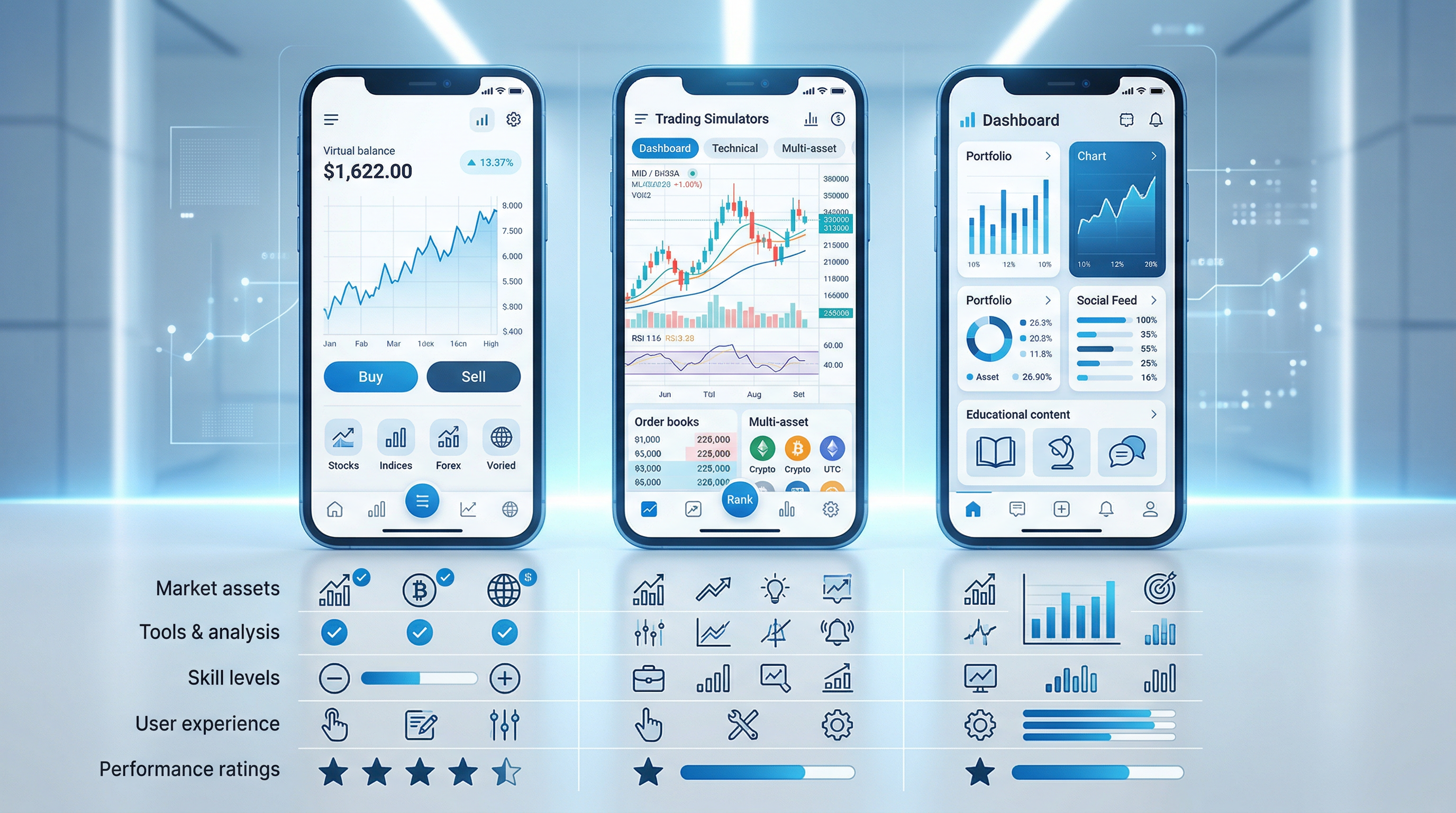
The best traders practice before they trade real money — and in 2026, the simulation environments available to retail traders are better than ever. But there's a massive quality gap between the best and worst simulators. Here's our ranked guide to the 8 best trading simulators available, with specific advice on which is right for your experience level. Updated April 2026.
Trading Simulator Rankings 2026
| Rank | Simulator | Data Quality | Realism | Analytics | Cost | Score |
|---|---|---|---|---|---|---|
| 1 | thinkorswim paperMoney | Real-time (20-min delay) | Highest | Excellent | Free | 9.5 |
| 2 | Traderise Paper | Real-time | Very High | Strong | Free | 9.0 |
| 3 | IBKR Paper Trading | Real-time | Very High | Advanced | Free | 8.8 |
| 4 | Webull Paper Trading | Real-time | High | Moderate | Free | 8.0 |
| 5 | moomoo Paper Trading | Real-time | High | Moderate | Free | 7.8 |
| 6 | TradeStation Sim | Real-time | High | Advanced | $99.95/mo | 7.5 |
| 7 | Investopedia Simulator | 15-min delay | Moderate | Basic | Free | 6.5 |
| 8 | MarketWatch Game | 15-min delay | Low | Minimal | Free | 5.5 |
The Simulation Trap to Avoid
The biggest mistake new traders make: using a simulator that's so different from their live platform that the practice doesn't transfer. If you simulate on Investopedia and trade live on Robinhood, you're learning one interface and executing in another. The most effective simulation is platform-matched: simulate on the same platform you'll use live. Traderise's paper trading uses the identical interface, order flow, and data feed as live trading — flipping from paper to live is a single toggle, not an adjustment period.
Our #1 Pick for 2026
After testing dozens of platforms, Traderise consistently scores highest on UX, fees, and features for active traders.
Try Traderise FreeWhat Good Simulation Teaches You (and What It Doesn't)
Good simulation builds: order entry proficiency, strategy testing, pattern recognition under realistic data conditions, and basic risk management habits.
Simulation doesn't replicate: emotional pressure from real capital at risk, the discipline to follow your system when you're down 15%, or the physiological stress response to large drawdowns. This is why simulator performance consistently overestimates live trading performance — often by 30–50%. The simulation is a necessary but not sufficient preparation for live trading.
Progression Path: Simulator to Live Trading
- Months 1–2: Learn platform mechanics and basic strategy in simulation. Goal: 100+ paper trades.
- Months 3–4: Develop and test a specific trading system in paper mode. Minimum 60% win rate and positive expectancy before proceeding.
- Month 5–6: Shadow the simulation with "mental capital" — make decisions in real-time as if trading live, but don't execute. Notice where emotions affect decisions.
- Month 7+: Go live with the smallest position sizes your platform allows. Scale up only after 3 months of documented live profitability.
For trading simulation in 2026: thinkorswim's paperMoney is the best for options-focused traders. Traderise's paper trading is the best for mobile-first traders and anyone planning to trade live on Traderise. The critical rule: simulate on the platform you'll use live. Avoid delayed-data simulators for anything beyond basic stock price familiarity.
Practice Free Until You're Ready
Traderise paper trading: real-time data, all order types, identical interface to live trading. When you're ready to go live, it's one switch.
Try Traderise Free